
Hospital/Healthcare
- Home
- Hospital/Healthcare
Hospital Security Safety Protocols & Emergency Response Training
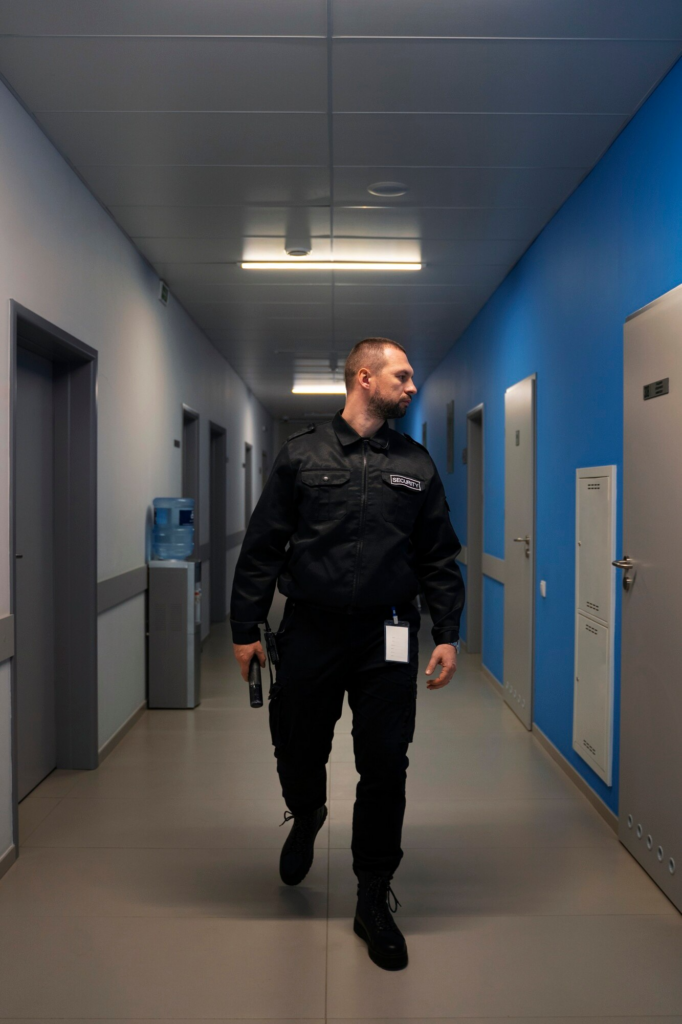
At Skyline Vision Security, our hospital security personnel are trained to respond professionally, calmly, and efficiently to medical emergencies, violent incidents, hazardous situations, and facility-wide critical events. Hospital security officers play a vital role in protecting patients, visitors, medical staff, vendors, and hospital property while maintaining a safe and secure healthcare environment.
Our officers receive specialized healthcare security training focused on de-escalation, emergency response, access control, patient safety, incident reporting, emergency evacuation procedures, HIPAA awareness, workplace violence prevention, and coordinated response protocols with hospital staff and law enforcement. Training standards are based on widely recognized healthcare emergency management practices used throughout hospitals and medical facilities nationwide.
Core Hospital Security Responsibilities
- Core Hospital Security Responsibilities
- Emergency response coordination
- Patient and visitor screening
- Access control and restricted area enforcement
- Behavioral crisis intervention
- Workplace violence prevention
- Patrol of emergency departments, psychiatric units, and parking structures
- Infant and pediatric protection protocols
- Active shooter preparedness
- Hazardous material incident response support
- Fire and evacuation procedures
- Crowd management and emergency lockdowns
- Incident documentation and reporting
- Coordination with nurses, physicians, administration, EMS, and law enforcement
Hospital Security Training Areas
- De-Escalation & Crisis Intervention
- Security officers are trained to professionally manage emotionally distressed, intoxicated, combative, or mentally unstable individuals using verbal de-escalation techniques and non-violent conflict resolution methods whenever possible.
- Active Shooter & Workplace Violence Response
- Hospital security personnel receive training on active assailant incidents, emergency lockdowns, threat assessment, emergency communication procedures, and rapid coordination with local law enforcement agencies.
- Emergency Evacuation Procedures
- Officers are trained in emergency evacuation operations, stairwell management, fire safety procedures, patient movement assistance, and maintaining safe evacuation routes during critical incidents.
- Access Control & Visitor Management
- Security personnel monitor entrances, emergency departments, maternity wards, restricted units, pharmaceutical storage areas, and sensitive patient care locations to ensure authorized access only.
- Behavioral Health & Psychiatric Unit Security
- Specialized training includes handling psychiatric emergencies, emotionally disturbed persons, involuntary holds, patient elopement prevention, and high-risk behavioral incidents.
- Hazardous Materials Awareness
- Security officers are trained to identify and isolate hazardous material incidents while assisting emergency responders and protecting staff and patients from exposure risks.
- Infant & Child Protection
- Officers are trained on infant abduction prevention systems, pediatric security procedures, maternity ward monitoring, and immediate response protocols for missing children or infants.
Common Hospital Emergency Codes
Code Red
- Fire or Smoke Emergency
- Initiates hospital fire response procedures, evacuation protocols, and emergency containment measures.
Code Blue
- Medical Emergency / Cardiac or Respiratory Arrest
- Indicates a life-threatening medical emergency requiring immediate medical response and resuscitation efforts.
Code Silver
- Active Shooter / Person with a Weapon / Hostage Situation
- Triggers armed threat response procedures, lockdown measures, and immediate law enforcement coordination.
Code Gray (or Grey)
- Combative or Violent Person
- Used when a patient, visitor, or individual becomes aggressive, disruptive, or physically threatening without a weapon.
Code Pink
- Infant Abduction
- Activated when an infant is suspected missing or abducted, typically from maternity or neonatal units.
Code Purple
- Child Abduction / Security Emergency
- In many hospitals, Code Purple refers to a missing or abducted child. In some facilities it may also indicate a hostage or security-related emergency.
Code Orange
- Hazardous Material Spill or Release
- Used for chemical spills, biohazard exposure, hazardous substance contamination, or dangerous material incidents.
Code Gold
- Bomb Threat / Specialized Emergency
- Code Gold varies significantly by region and hospital system. Some facilities use it for bomb threats, while others use it for severe infrastructure emergencies or external threats.
Additional Hospital Codes Commonly Used
Code Black
- Bomb Threat
- Frequently used for bomb threats or suspicious packages in many healthcare systems. In several hospitals, this replaces Code Gold.
Code White
- Pediatric Medical Emergency or Violent Person
- Depending on the facility, this may indicate a pediatric emergency or violent individual requiring immediate assistance.
Code Yellow
- Disaster / Missing Patient / External Emergency
- Often used for mass casualty incidents, missing patients, internal disasters, or emergency preparedness activation.
Code Green
- Emergency Activation / Evacuation
- May indicate emergency operations activation, evacuation procedures, or patient elopement depending on facility policy.
Code Brown
- Hazardous Spill / Severe Weather
- Typically associated with severe weather conditions, utility failures, or internal hazardous spills.
Code Adam
- Missing or Abducted Child
- A nationally recognized child abduction alert procedure used in many healthcare facilities.
Healthcare Security Officer Standards
- Maintain professionalism under high-stress situations
- Protect patient dignity and confidentiality
- Communicate effectively with medical personnel
- Respond rapidly to emergencies
- Preserve life safety during critical incidents
- Reduce liability and workplace violence risks
- Support hospital emergency preparedness operations
- Maintain detailed incident documentation and reporting
Commitment to Hospital Safety
Healthcare environments require highly trained security professionals capable of responding to sensitive and rapidly evolving situations. Skyline Vision Security officers are prepared to maintain a safe, secure, and professional environment while supporting medical staff and protecting patients, visitors, and healthcare facilities at all times.
Training programs are continuously updated to align with evolving healthcare security standards, emergency preparedness guidelines, workplace violence prevention practices, and hospital emergency response procedures.
RIGOROUS SECURITY TRAINING PROGRAM

Emergency Preparedness

In-dept Public Relations

Harassment Prevention

Anti-Terrorism Techniques

emergency evacuation

Surveillance Techniques

Workplace Safety Protocol

Specific Training of Verbal

Access Control

Crowd Control

De-escalation

Power To Arrest

complete apprehension

Appropriate Use of Force

Sexual Harassment
California BSIS Security Guard Training Overview
All security officers in California must complete the state-mandated training established by the Bureau of Security and Investigative Services (BSIS).
Total: 8 Hours
- Powers to Arrest (legal authority, liabilities, and procedures)
- Appropriate Use of Force (de-escalation techniques, lawful use of force, and reporting requirements)
Post-Registration Training Requirements
Within 30 Days of Guard Card Issuance
16 Hours Total
- Mandatory BSIS modules (8 hours)
- Elective security skills training (8 hours)
Within 6 Months of Guard Card Issuance
16 Hours Total
- Remaining mandatory modules (8 hours)
- Additional elective training modules (8 hours)
Total Required Training During the First 6 Months: 40 Hours
8 Hours Annually
- Refresher training
- Updates on Use of Force policies
- Legal and procedural updates
- Incident reporting and risk mitigation practices
Skyline Vision Security Alliance – Advanced Training Standards
Our Professional Training Includes:
- Internal security training modules aligned with BSIS standards
- Site-specific post orders and operational procedures
- Annual refresher and compliance training programs
- Incident response and de-escalation training
- Customer service and professional conduct development
- Risk assessment and liability awareness instruction
- Supervisor and leadership development programs
Official BSIS Security Training Resources & Handbooks
Hospital/Healthcare Training
Our Hospital and Healthcare Training program is designed to prepare security personnel for the unique demands of medical and healthcare environments. Hospitals require a careful balance of safety, compassion, and professionalism, and our training ensures officers are fully equipped to meet those expectations.
Security staff are trained to operate in sensitive settings where patients, families, and medical professionals must be protected with minimal disruption. The focus is on maintaining a calm, respectful presence while ensuring strict safety protocols are followed at all times.
This program emphasizes communication skills, situational awareness, and proper coordination with hospital staff. Officers learn how to handle high-stress situations such as emergencies, crowd control, and visitor management while maintaining order and professionalism.
Our Hospital and Healthcare Training program is designed to prepare security personnel for the unique demands of medical and healthcare environments. Hospitals require a careful balance of safety, compassion, and professionalism, and our training ensures officers are fully equipped to meet those expectations.
Security staff are trained to operate in sensitive settings where patients, families, and medical professionals must be protected with minimal disruption. The focus is on maintaining a calm, respectful presence while ensuring strict safety protocols are followed at all times.
This program emphasizes communication skills, situational awareness, and proper coordination with hospital staff. Officers learn how to handle high-stress situations such as emergencies, crowd control, and visitor management while maintaining order and professionalism.
We also focus on patient privacy, de-escalation techniques, and appropriate response procedures to ensure both safety and dignity are preserved in all interactions. Officers are trained to recognize risks early and respond effectively without interfering with medical care.
By the end of this training, security personnel are fully prepared to support healthcare facilities with reliable protection, ensuring a safe environment for patients, staff, and visitors 24/7.